DSC Member Spotlight: Dasha Simons
1 September 2026
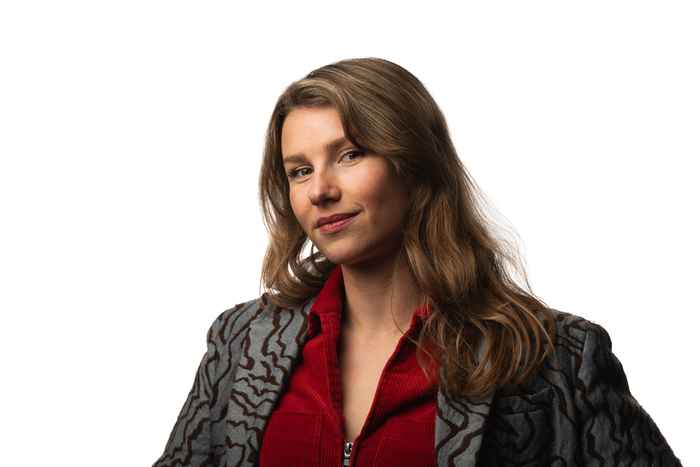
Tell us more about your role and how do you apply data science to your projects
I study what data science does to people and what ethical questions come throughout the development of (new) models. As part of the human-aligned video AI lab, I research ethical questions surrounding human-AI alignment: the practice of aligning AI systems to human preferences, intent, and values. Every day, AI systems decide who gets the job, the psychological support people seek through LLMs, and what voting advice ChatGPT gives to them.
Take video. Video-AI can recognise you even when your face is blurred. Not from your facial features, from the way you walk. Your gait is almost as unique as a fingerprint, and most privacy protections did not see it coming. Video generation soaks up biases from across the world. Whose streets make it into the training data, whose movements. Feed that into world models, models built to simulate and predict the world, and those biases start deciding what our world looks like next. What movement counts as suspicious and which one is not. As AI becomes more capable and more embedded in the fabric of society, human-AI alignment becomes central to how this all plays out. We can align AI to human values. We just haven't agreed on whose.
Is there a project from this past year that you are most proud of?
I spent a year pulling seven disciplines together on human-AI alignment. Psychologists studying what AI does to our behaviour. AI safety researchers drawing lines in the sand and aiming to stay in control. AI researchers to automate alignment data collection as much as possible. Designers crafting smoother human-AI interactions. Lawyers deciding who is responsible when it goes wrong. Ask them all what human 'preferences' or 'values' mean. The confusion alone could turn a compass in circles and we have a paper. That's what interdisciplinary work feels like. Sometimes humbling. But when fields stop visiting each other and actually move in together, and sit with the tensions, somewhere in that friction a new vocabulary slowly starts to form for human-AI alignment.
What do you like most about being a DSC member?
The range of disciplines in one community. Data scientists, social scientists, lawyers, each bringing a different lens to the same problems. That's rare, and it shows in the richness of conversations, events, and collaborations.
What is your favourite data science method?
All of them, for reasons that emerge in practice of human-AI alignment. Finetuning can reduce safety measures. Privacy preserving techniques can amplify bias. Humans are more biased with AI than with each other. Every method comes with a tension nobody put on the box. Those are the ones that open up the exciting and worthwhile questions.
Are you camp Python/R/or something else?
Camp "what problem are we actually solving and for whom.” I'll leave the syntax wars to others.