Paul Verhagen explores technology, geopolitics and power in The Techtonic Shift
3 September 2026
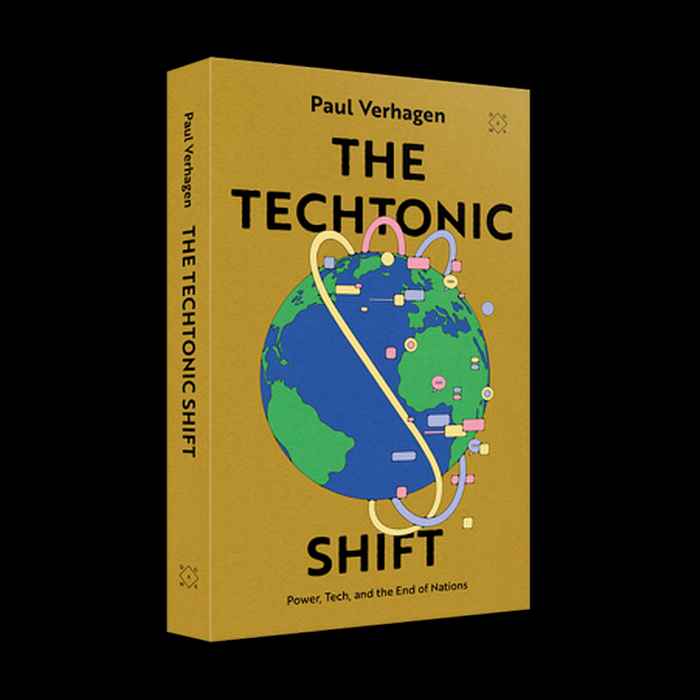
Published on 3 September, The Techtonic Shift describes the break-up of what Verhagen calls “Digital Pangea”: an era in which information, trade, talent and technology could move relatively freely across borders. That world, he argues, was built on the assumptions that there were no enemies, no meaningful borders and no limits to technological progress.
Those assumptions no longer hold. Competition between major powers is reshaping the technology on which societies depend, from semiconductors and cloud infrastructure to the AI models built on top of them. Information is increasingly treated as a security asset; technology as a matter of sovereignty; and openness as a potential vulnerability.
Technology is a political instrument
Verhagen wrote the book to offer perspective in a period that can feel confusing and unstable. At its centre is a question many people may recognise: what exactly is happening?
His answer is that the return of geopolitics, combined with rapid technological change, is placing democratic institutions under considerable pressure. In the space left by institutions that have not kept pace with technological change, a small number of private companies have gained the power to make decisions with far-reaching political consequences.
Verhagen hopes the book makes one point especially clear: technology and politics cannot be separated. Technologies are not only tools; they can also function as instruments of power.
Lecture during UvA Alumni Week
On Friday 9 October Verhagen will discuss his point of view in a lecture in the University Library, De Salon.