Professors bring brain science and algorithms to Amsterdam primary schools
2 June 2026
Curious minds and brain–computer interfaces
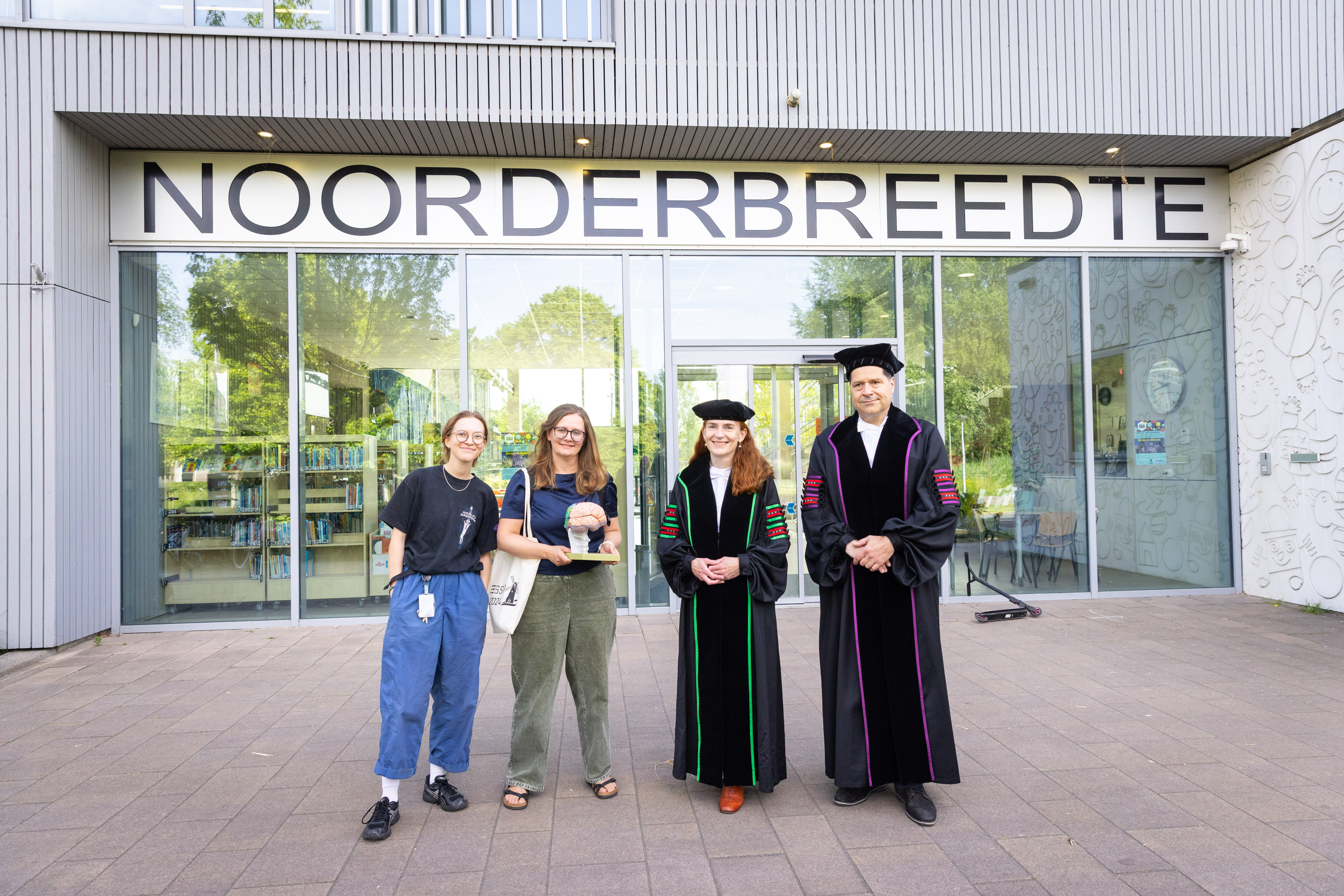
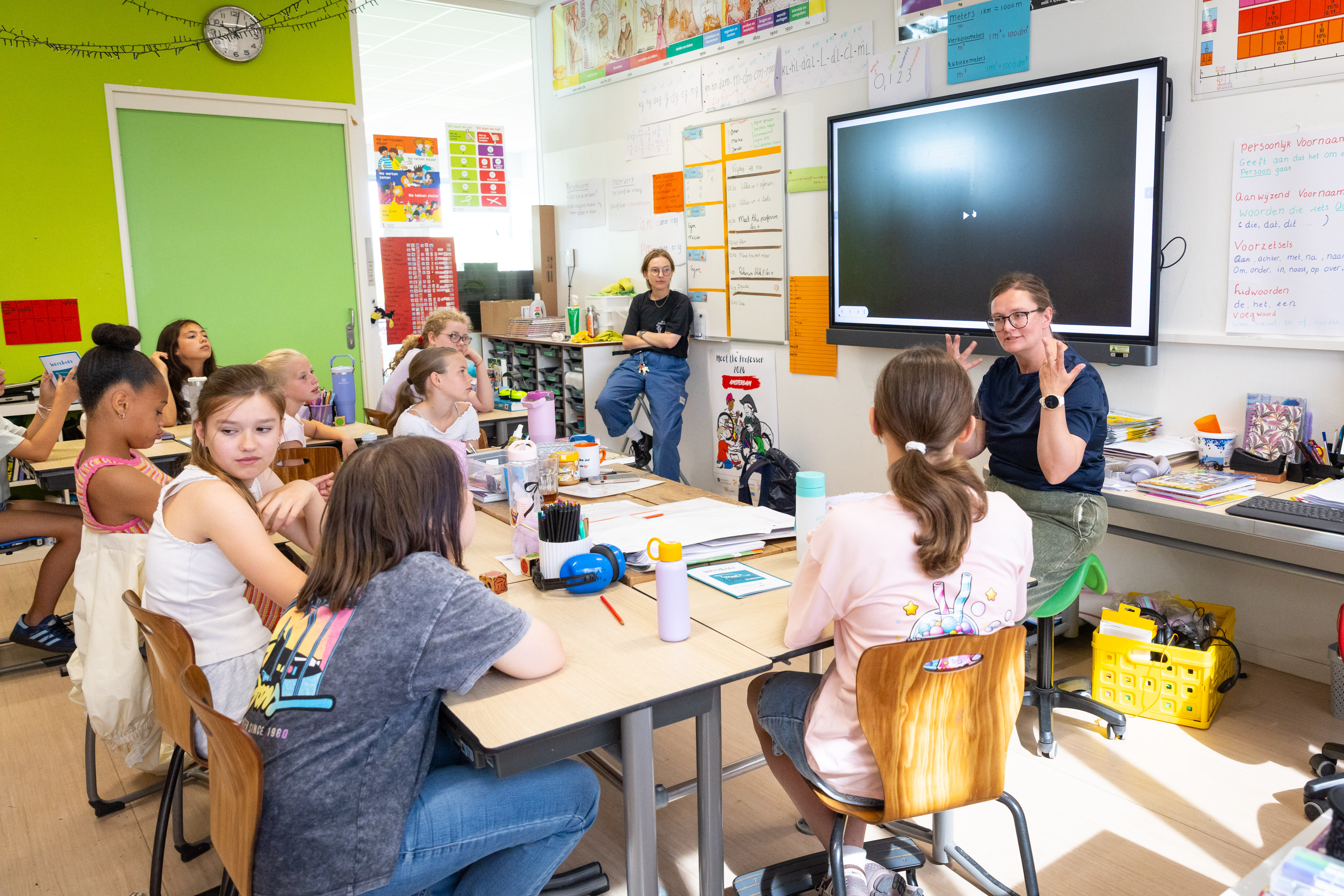
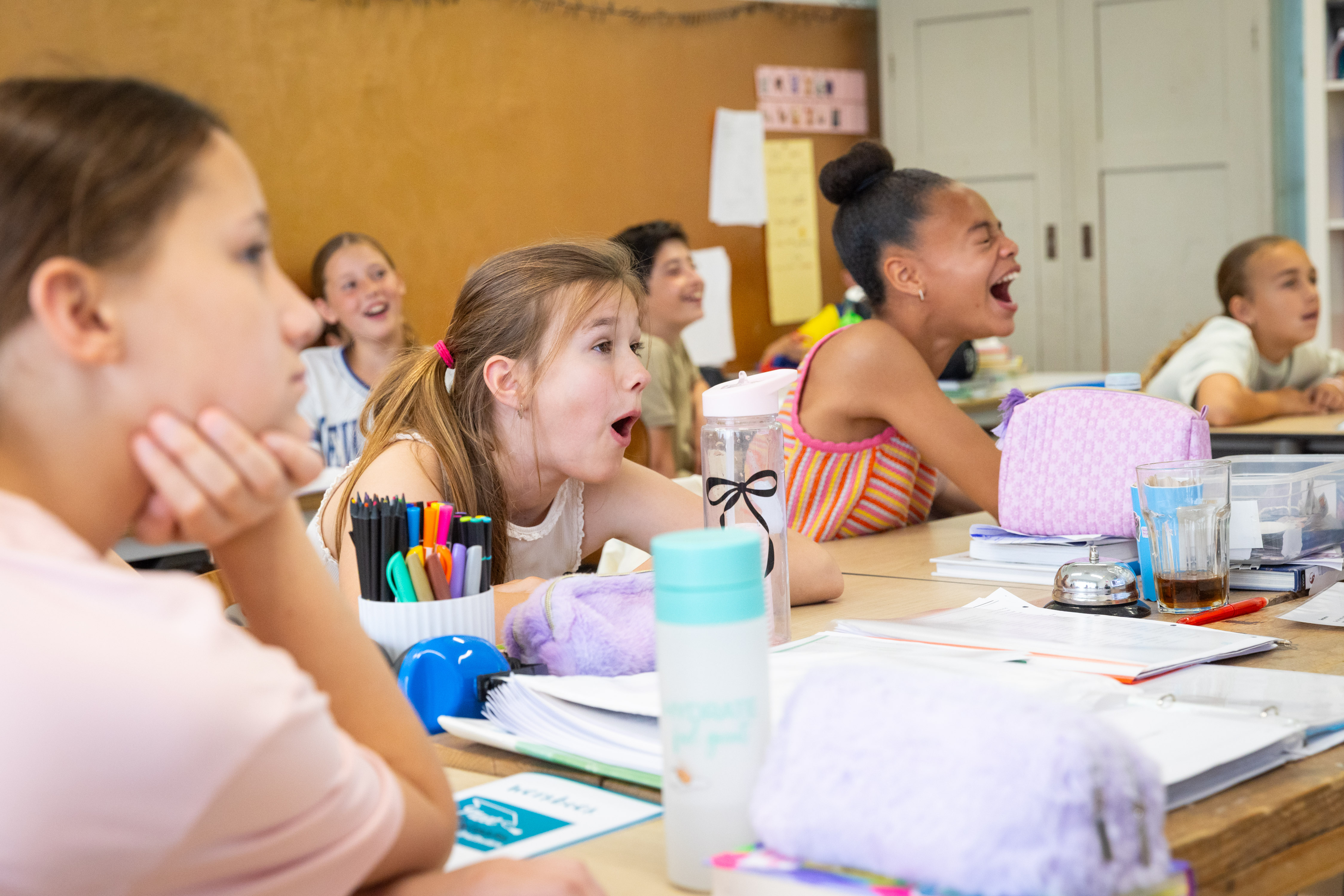
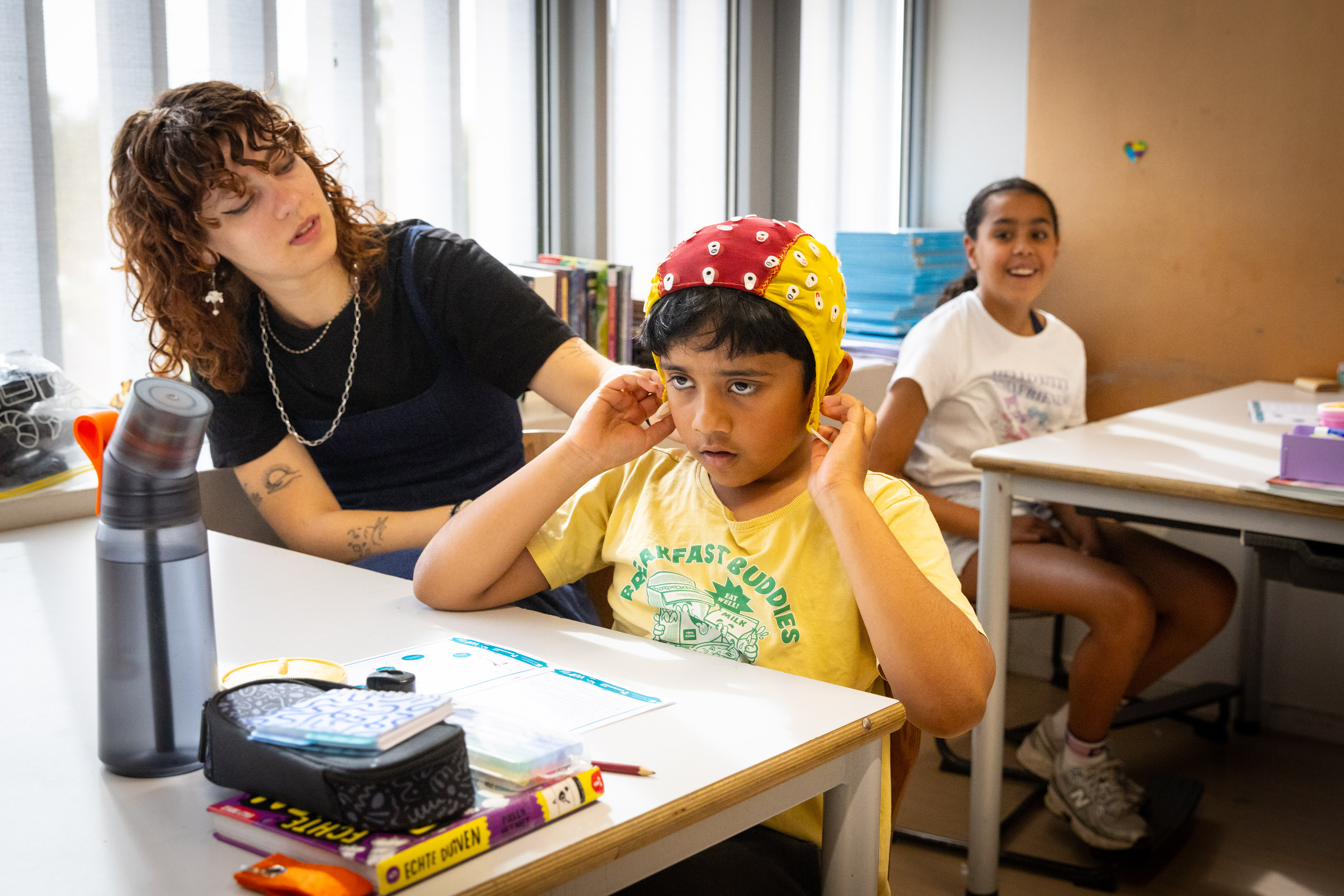
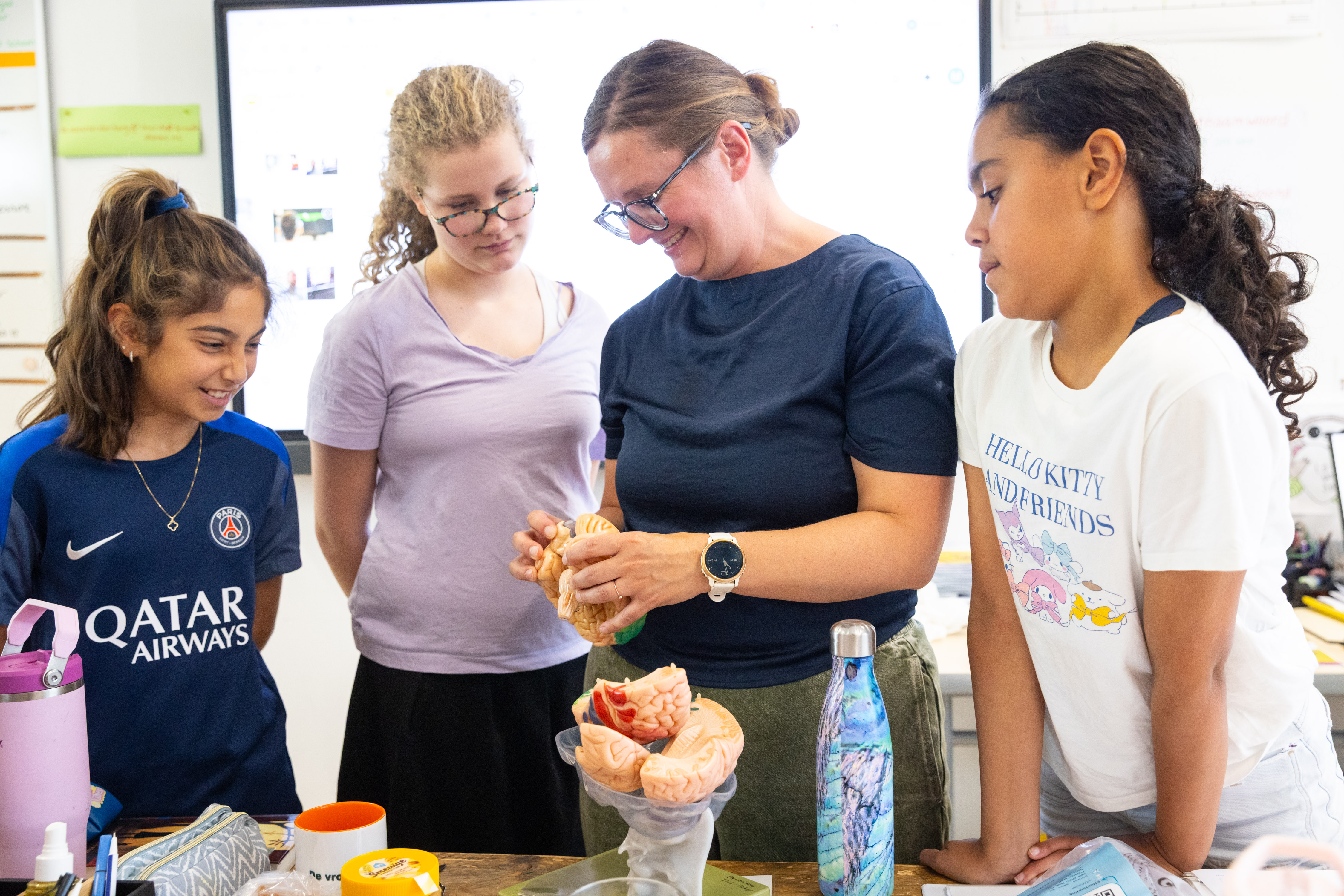
In her lesson on brain–computer interfaces, Groen explained how our brains enable us to see and move effortlessly and how scientists can look inside the brain to study its activity. She also showed how computer-controlled brain implants might one day help people who are blind or paralysed to see and move again. The pupils could touch and take apart 3D brain models, prompting plenty of “oohs” and “aahs” and an occasional “yuck”. Finding a volunteer to demonstrate a simulated brain measurement was easy – almost every child wanted to try it.
The children were so curious. They asked lots of questions and chatted excitedly about what they already knew about our brains – for example about family members with memory issues. It was a lot of fun to show them that a professor isn’t always a man with a beard and a white lab coat.Iris Groen, Associate Professor in the Video & Image Sense Lab
From neural networks to secret codes
Three other professors at the Informatics Institute also took part this year. Johan Bollen spoke to children about neural networks, showing how computers can learn to recognise patterns. Christian Schaffner introduced the pupils to cryptography, quantum mechanics and theoretical computer science by teaching them a new secret language. Alfons Hoekstra explained the concept of digital twins – virtual models of the human body that doctors can use to make predictions about health and disease.
The children wanted to know if it isn’t scary to work with diseases every day. To illustrate the models we use, we played a dice game to simulate the Galton-Watson process. A couple of pupils immediately wanted to programme it in Scratch.Alfons Hoekstra, Professor of Computer Science in the Computational Science Lab