Publication about the importance of creating effective risk mitigation policies
Nature Sustainability publication ‘Prosocial preferences improve climate risk management in subsistence farming communities’
Researchers suggest that a combination of insurance subsidies and policies that promote 'prosocial preferences' - decision-making preferences that account for community well-being - can facilitate co-existence of formal and informal risk transfer mechanisms.

Fernando Santos, researcher of the Socially Intelligent Artificial Systems (SIAS) group of the Informatics Institute and did a study together with researchers from Princeton University, Boston University and IIASA (International Institute for Applied Systems Analysis).
Risk mitigation policies
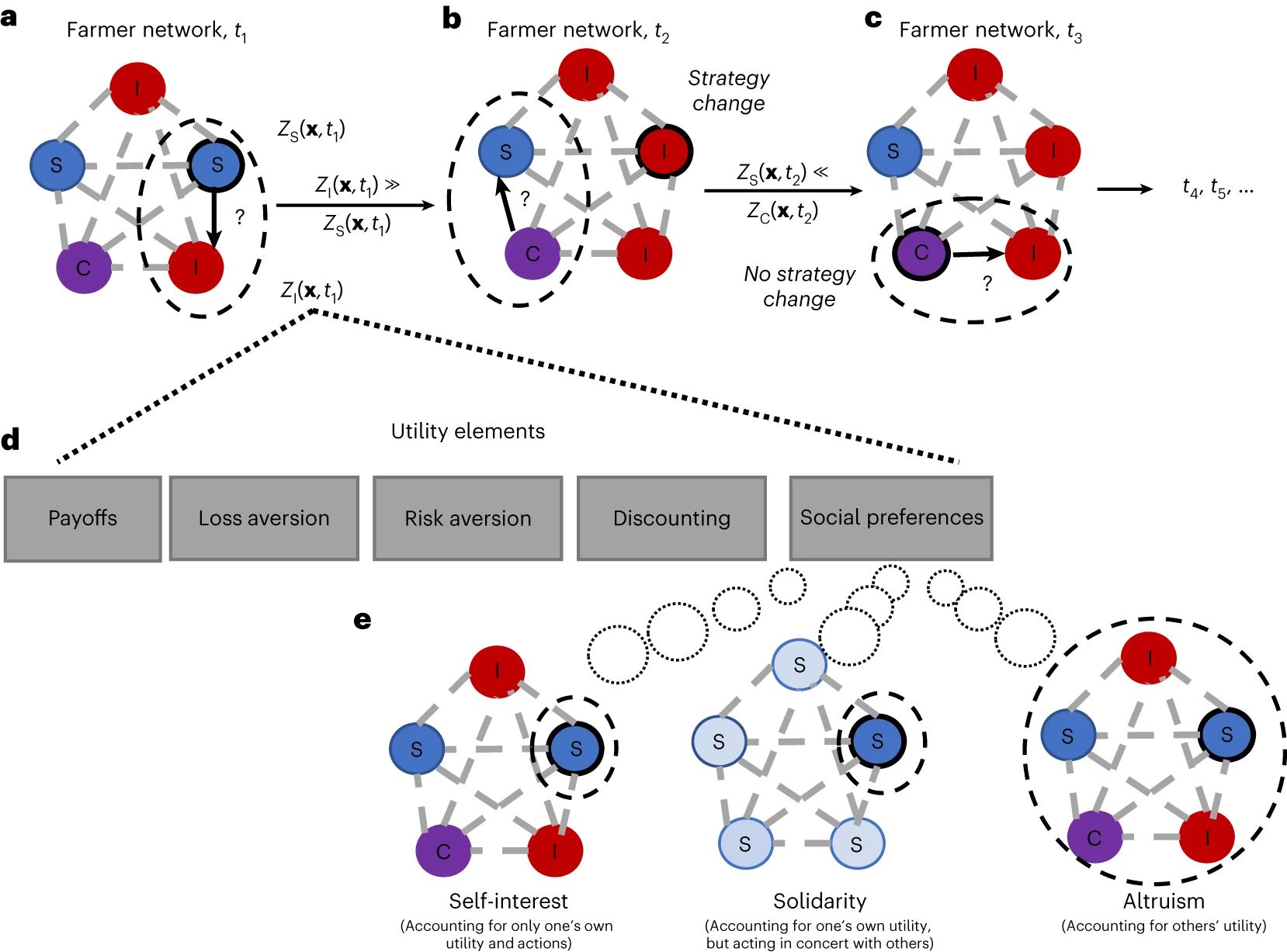
With climate change threating smallholder farms, the importance of creating effective risk mitigation policies cannot be overstressed. By focusing on smallholder farming communities in Nepal and Ethiopia, and applying evolutionary game theory modelling techniques, they have explored the effectiveness of combining formal (e.g., insurance) and informal (e.g., revenue sharing) risk mitigation strategies.
Findings
Findings reveal that the success of informal risk mitigation relies heavily on the presence of strong prosocial behaviours within communities. Remarkably, fostering such prosocial preferences alongside formal risk mitigation measures can significantly reduce farming losses by up to 26% and boost community agricultural income by 5%.
SIAS and Civic AI Lab
This research underscores the importance of human social dynamics and social values in crafting effective policy interventions — a vision at the core of the Civic AI Lab and SIAS, where they aim at devising socio-technical solutions that on promote equal opportunities and prioritize community engagement, especially among marginalized groups.
More information
Summary and press releases Princeton University and IIASA (International Institute for Applied Systems Analysis).
Nature Sustainability 14 February 2024
Prosocial preferences improve climate risk management in subsistence farming communities.